

If an animal is loose in your living area or you suspect venomous wasps or active termite swarms, do not disturb the nest or try DIY chemical foggers. Call our Melville technicians directly at (321) 496-4080 for 24/7 emergency dispatch.
Achieving a mosquito-free yard requires combining standing water elimination with targeted barrier treatments applied to shaded perimeter foliage from March through November. The Suffolk County Division of Vector Control actively monitors Asian tiger mosquitoes and West Nile virus pools. Eliminate bird bath water every 5 days, unclog gutters, and schedule monthly barrier mists by calling (321) 496-4080.
In This Guide (Table of Contents)
- 01.Long Island Mosquito Season: March Through November Biological Cycles
- 02.Asian Tiger Mosquito Biology: Container Breeders in Suburbia
- 03.Source Reduction Protocol: Eliminating Cryptic Standing Water in Gutters and Yard Drains
- 04.Micro-Encapsulated Barrier Treatments: Foliage Applications and Residual Longevity
- 05.Protecting Beneficial Pollinators: Applying Sprays Safely Away from Flowering Shrubs
- 06.Suffolk County Vector Surveillance and Health Department Arbovirus Alerts
- 07.Frequently Asked Questions
Long Island Mosquito Season: March Through November Biological Cycles
Long Island's unique geography—surrounded by the Long Island Sound and Atlantic Ocean—creates high ambient humidity and extended warm seasons that foster intense mosquito activity. The seasonal mosquito cycle begins as early as late March when overwintering mosquito eggs hatch in spring meltwater pools and continues through mid-November until the first sustained hard freeze.
Suffolk County and Nassau County health departments monitor mosquito populations continuously through specialized vector surveillance traps. Warmer springs and prolonged autumn temperatures have expanded the active breeding window, making early seasonal barrier planning essential for outdoor family comfort.
Asian Tiger Mosquito Biology: Container Breeders in Suburbia
Historically, Long Island pest control focused on the common house mosquito (Culex pipiens), a night-flying insect that breeds in polluted water and transmits West Nile virus. Over the past decade, however, the invasive Asian Tiger Mosquito (Aedes albopictus) has become the dominant daytime pest across suburban neighborhoods like Melville, Syosset, and Huntington.
Asian tiger mosquitoes are characterized by bold black-and-white striped legs and aggressive daytime biting habits. Unlike swamp mosquitoes, Asian tigers are strict container breeders that do not need large ponds. They deposit drought-resistant eggs along the inner walls of discarded plastic cups, clogged gutters, tire swings, and hollow children's playsets.
Source Reduction Protocol: Eliminating Cryptic Standing Water in Gutters and Yard Drains
Chemical barrier applications are most effective when paired with aggressive source reduction. A female mosquito requires standing water to complete her larval and pupal lifecycle, which takes as little as 7 to 10 days in warm July weather.
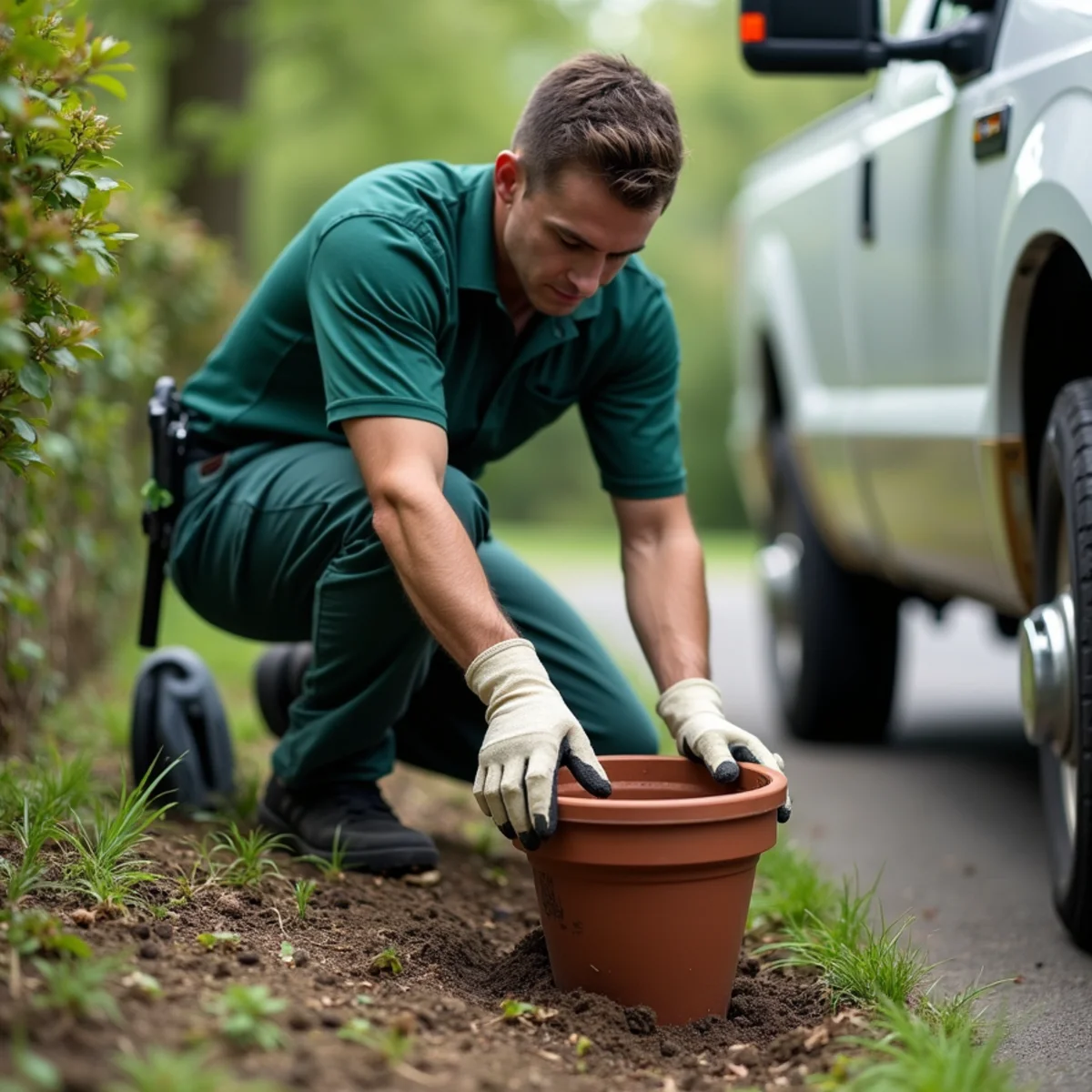
Our technicians perform comprehensive yard audits to identify cryptic breeding reservoirs that homeowners overlook. Corrugated downspout extensions are a notorious culprit; the flexible accordion folds retain pools of stagnant rainwater. Uncapped fence posts, hollow tree holes, tarp folds over firewood piles, and saucer trays beneath patio planters also harbor thriving larval colonies.

Micro-Encapsulated Barrier Treatments: Foliage Applications and Residual Longevity
Adult mosquitoes spend the vast majority of their lives resting rather than flying. To avoid midday heat and desiccation, adult mosquitoes seek shelter on the cool, humid undersides of leaves on broadleaf shrubs, groundcovers (like pachysandra and ivy), and along perimeter tree canopies.
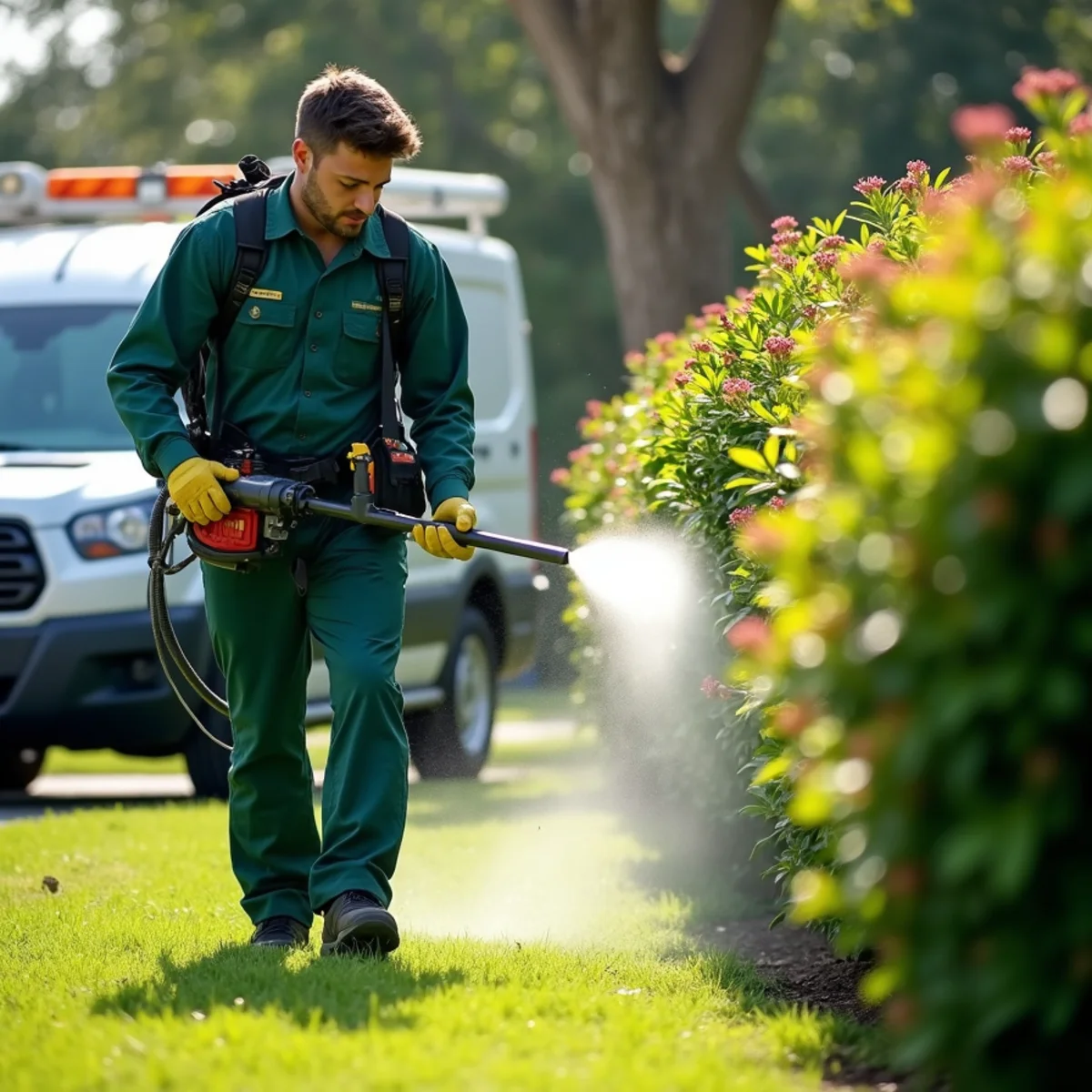
Sayonara Pest Control utilizes high-pressure mist-blower equipment to apply micro-encapsulated EPA-registered barrier treatments to these daytime resting zones. The specialized micro-capsules bond electrostatically to the undersides of foliage, creating a continuous residual barrier that withstands summer rainstorms and active sprinkler systems, providing 21 to 30 days of knock-down protection.
Protecting Beneficial Pollinators: Applying Sprays Safely Away from Flowering Shrubs
Environmental stewardship is a cornerstone of our Integrated Pest Management approach. Honeybees, bumblebees, and native pollinators are essential to Long Island's suburban ecosystem and garden blooms.
Under strict NYSDEC commercial pesticide guidelines, our licensed technicians never spray flowering plants, open vegetable gardens, or active pollinator blooms. We map property perimeters carefully, treating only non-flowering foliage, property fence lines, tall perimeter grasses, and dense shaded thickets where mosquitoes congregate, keeping beneficial insects safe.
Suffolk County Vector Surveillance and Health Department Arbovirus Alerts
Mosquitoes are not merely nuisance pests; they are significant vectors of public health concern. The Suffolk County Department of Health Services Division of Vector Control operates dozens of permanent carbon dioxide and gravid trap stations throughout the county, routinely identifying mosquito pools testing positive for West Nile Virus and Eastern Equine Encephalitis (EEE).
Professional perimeter mosquito reduction drastically lowers the density of biting vectors on your property, protecting your family, young children, and outdoor pets from insect-borne pathogens throughout the peak barbecue and outdoor entertaining season.
Comprehensive Long Island Yard Mosquito Prevention Checklist
- ✓Dump standing water weekly: Invert wheelbarrows, empty flowerpot saucers, and refresh pet bowls every 3 to 5 days to interrupt larvae development.
- ✓Clean and pitch roof gutters: Clogged gutters holding decomposing oak leaves and standing water are the #1 uninspected mosquito breeding site.
- ✓Inspect corrugated downspout extensions: Flexible accordion drain pipes trap standing water in their ridges, breeding thousands of mosquitoes.
- ✓Treat bird baths and decorative ponds with BTI dunks: Bacillus thuringiensis israelensis biological larvicide kills mosquito larvae without harming birds.
- ✓Trim overgrown ornamental shrubs: Adult mosquitoes rest during the heat of the day on the undersides of dense, shaded broadleaf foliage.
- ✓Schedule professional barrier sprays: Our micro-encapsulated yard treatments bond to perimeter foliage, providing 21 to 30 days of weather-resistant protection.
Advice from Our Melville Field Operators
Most Long Island homeowners think mosquitoes fly in from miles away from local marshes. In reality, the invasive Asian Tiger mosquito (Aedes albopictus), which bites aggressively all day long, has a flight range of only 150 to 300 feet. That means the mosquitoes biting your ankles on your patio were almost certainly born in your own yard or your immediate neighbor's. A single bottle cap of standing water can breed 100 mosquitoes in a week. Source reduction combined with targeted perimeter foliage misting gives you complete control over your backyard all summer long.
Frequently Asked Questions
Will rain wash away my mosquito yard treatment?
No. Our treatments utilize micro-encapsulated formulations containing specialized bonding polymers. Once the spray dries completely onto foliage (which takes approximately 30 to 45 minutes), it is rainfast and will not wash off during typical Long Island summer showers.
Are your mosquito yard sprays safe for dogs and children?
Yes. Once the treatment has fully dried (typically 1 to 2 hours depending on humidity), children and household pets can safely return to play on lawns and patios with zero chemical transfer risk.
Do you offer organic or all-natural mosquito barrier options?
Yes. Sayonara Pest Control provides botanical, all-natural mosquito spray treatments formulated from essential oils such as cedarwood, peppermint, and rosemary oil. These natural repellents are ideal for organic vegetable gardeners and sensitive waterfront properties.
How often should mosquito barrier treatments be scheduled?
For optimal uninterrupted protection throughout the Long Island summer, we recommend recurring treatments every 21 to 28 days from late April through October.
About Sayonara Pest Control
Based at 445 Broadhollow Rd, Suite 25 in Melville, NY, Sayonara Pest Control provides licensed extermination and humane wildlife trapping across Suffolk County, Nassau County, and NYC. Our focus is root-source elimination through Integrated Pest Management.