

If an animal is loose in your living area or you suspect venomous wasps or active termite swarms, do not disturb the nest or try DIY chemical foggers. Call our Melville technicians directly at (321) 496-4080 for 24/7 emergency dispatch.
Do not panic, swat, or allow the bat to escape if someone was sleeping in the room. The New York State Department of Health and Suffolk County Department of Health Services require rabies testing whenever a bat is found in a room with a sleeping person, unattended child, or pet. Close interior doors, turn on lights, open an exterior window only if rabies exposure is completely ruled out, and call professional wildlife dispatch at (321) 496-4080 for safe capture.
In This Guide (Table of Contents)
- 01.Immediate Room Triage: Why You Must Never Swat or Chase a Flying Bat
- 02.The Critical Rabies Question: When Is Testing Legally Required in New York?
- 03.How Long Island Bats Enter Homes: Big Brown vs. Little Brown Bats
- 04.Step-by-Step Safe Capture Protocol When a Bat Lands
- 05.Humane Exclusion and One-Way Valves: Why Sealing Vents in Summer Traps Pups
- 06.Long Island Bat Laws, Guarantees and Permanent Architectural Proofing
- 07.Frequently Asked Questions
Immediate Room Triage: Why You Must Never Swat or Chase a Flying Bat
Waking up to a bat swooping across your bedroom ceiling is one of the most alarming experiences a Long Island homeowner can face. The instinctive human reaction is to panic, grab a broom, or attempt to strike the bat out of the air. This reaction is extremely dangerous and counterproductive. Bats in enclosed residential rooms fly in sweeping U-shaped flight paths between walls because they are using echolocation to map boundaries and find an exit.
Chasing an airborne bat agitates the animal, increasing the likelihood that it swoops lower toward your face or drops behind heavy furniture, headboards, or radiator covers where capture becomes significantly harder. More critically, bats have microscopic teeth; a bite can feel like a faint pinprick or leave no visible mark whatsoever on sleeping adults or children. Preserving the animal intact for biological evaluation is the single most important objective during the first five minutes.
The Critical Rabies Question: When Is Testing Legally Required in New York?
Under New York State Department of Environmental Conservation (NYSDEC) and New York State Department of Health (NYSDOH) guidelines, any bat found in a room where individuals were asleep, intoxicated, or otherwise incapacitated must be captured and submitted for laboratory rabies screening. This rule also applies if an unattended infant, toddler, or domestic pet was present in the room.
According to the Suffolk County Department of Health Services Division of Public Health, less than one percent of wild bats carry rabies, but among bats captured indoors that undergo testing, the positivity rate is notably higher. If the bat escapes out an open window before a health department evaluation can be completed, physicians almost universally recommend rabies post-exposure prophylaxis (PEP) out of medical caution. Proper containment protects your family from unnecessary injections.
How Long Island Bats Enter Homes: Big Brown vs. Little Brown Bats
Long Island structures primarily host two species: the Big Brown Bat (Eptesicus fuscus) and the Little Brown Bat (Myotis lucifugus). During summer maternity seasons (May through August), female colonies roost inside hot attic spaces, soffit voids, and behind gable louvers along the Route 110 corridor, Dix Hills, and Huntington.
Bats do not gnaw wood or chew structural wiring like rodents; instead, they exploit pre-existing architectural gaps as small as 3/8 of an inch. Common entry points include warped fascia boards, gaps beneath ridge vent caps, chimney flashing separations, and open attic louvers. As temperatures spike in mid-summer, juvenile bat pups exploring attic floors frequently slip down wall cavities, following plumbing vent pipes or electrical conduits into second-floor bedrooms or master closets.
Step-by-Step Safe Capture Protocol When a Bat Lands
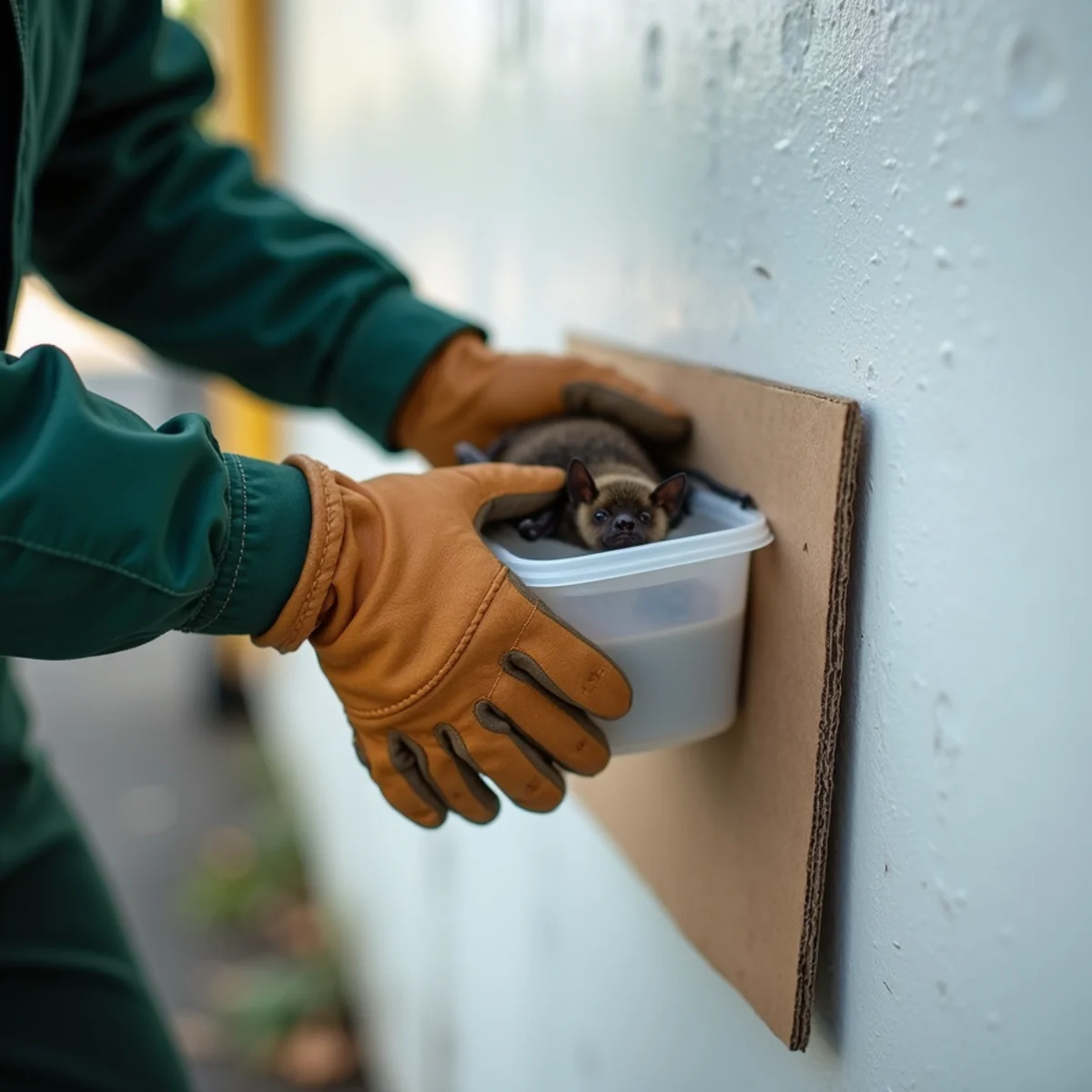
Once a bat exhausts itself flying, it will almost always land and hang vertically from curtains, textured sheetrock, picture frames, or window screens. This is your moment for controlled, safe capture without harming the animal:
Step 1: Put on thick leather work gloves. Do not use thin latex or gardening cloth, which can be penetrated by bat incisors.
Step 2: Approach the resting bat slowly and place a clear plastic container, Tupperware bowl, or rigid cardboard shoe box over the bat against the flat surface.
Step 3: Carefully slide a piece of stiff cardboard, folder, or plastic lid between the surface and the container rim, gently coaxing the bat's feet to release until it rests safely inside the container.
Step 4: Tape the lid firmly to the container. Poke small breathing pinholes only in the cardboard lid, not large enough for a snout to poke through.
Step 5: Store the container in a cool, quiet room away from children and pets, and call professional wildlife dispatch immediately.
Humane Exclusion and One-Way Valves: Why Sealing Vents in Summer Traps Pups
Homeowners often want to immediately caulk roof holes the morning after a bat encounter. This can trigger a secondary disaster. Under NYSDEC wildlife regulations, commercial bat exclusion is strictly restricted during the summer maternity season (typically May 15 through August 15). Sealing entry holes during this window traps flightless pups inside your attic.
Starving, trapped pups crawl downward toward cooler air, resulting in dozens of bats entering living areas through recessed light fixtures and ceiling HVAC vents. Once maternity restrictions lift in late summer, our licensed technicians install professional one-way exclusion cones. These devices allow mature bats to exit at dusk to forage on mosquitoes over Long Island lawns, but prevent them from re-entering at dawn, achieving 100% humane clearance.
Long Island Bat Laws, Guarantees and Permanent Architectural Proofing
Because bats play a vital ecological role by consuming thousands of mosquitoes, moths, and agricultural pests nightly across Suffolk and Nassau counties, New York law protects them from chemical fumigation, poison baits, or extermination. Permanent bat proofing requires architectural remediation rather than chemical sprays.
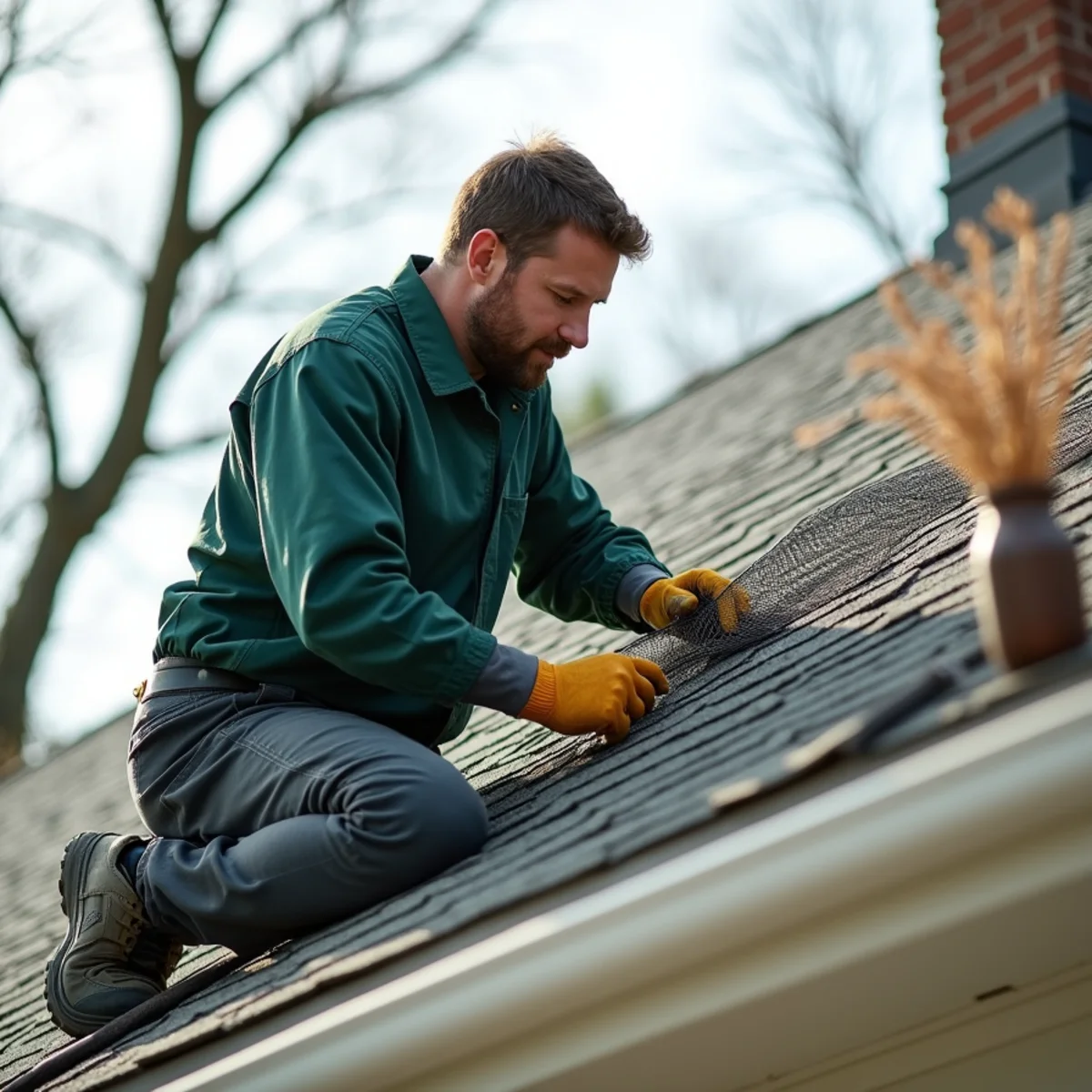
Sayonara Pest Control specializes in full attic exclusion. We seal ridge vents with chew-proof galvanized wire mesh, install custom stainless steel chimney caps, and replace deteriorating gable louver screening. Every exclusion package is backed by our written multi-year structural warranty, giving Long Island homeowners absolute peace of mind.
Emergency Bat in Bedroom Containment Protocol
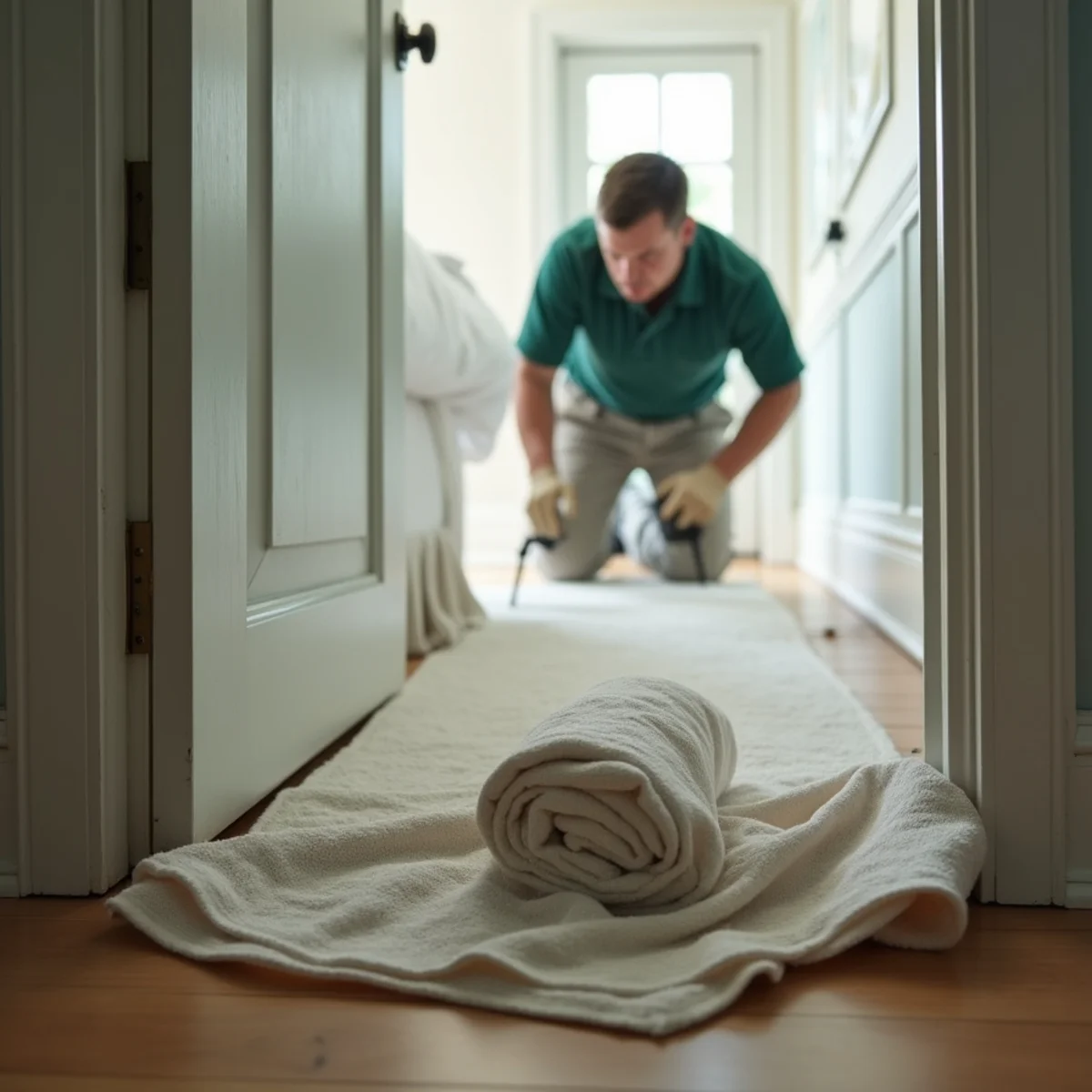
- ✓Isolate the bedroom immediately: Close all interior doors and place a rolled-up towel beneath the door gap to prevent escape into hallways.
- ✓Do not attempt to strike or swat the bat: Striking damages the brain tissue required for NYS rabies laboratory diagnostics and causes defensive biting.
- ✓Turn on all room lights: Bats are nocturnal navigators; bright light encourages them to land on a curtain or wall rather than flying erratically.
- ✓Wear heavy leather work gloves: Never touch a bat with bare hands; their teeth are razor-fine and bites can occur without waking a sleeper.
- ✓Secure pets and children in another room: Prevent curious dogs or cats from swatting the bat or sustaining unseen scratch exposures.
- ✓Call 24/7 wildlife dispatch: Our Melville technicians deploy specialized capture cones and safe containment boxes for county rabies verification.
Advice from Our Melville Field Operators
In over 30 years of Long Island wildlife service across Melville, Huntington, and Dix Hills, the most common mistake homeowners make is swatting a flying bat with a broom or tennis racket. When you smash a bat, you often crush the cranium, making it impossible for the Suffolk County Department of Health Services laboratory in Yaphank to test brain tissue for rabies. If the bat cannot be tested, the local health department will mandate that everyone who slept in that room undergo the full, expensive post-exposure rabies vaccine series. Keep the room sealed, leave the bat grounded, and let certified technicians handle extraction.
Frequently Asked Questions
Can I open the window and let the bat fly out?
Only if you are 100% certain that no one was sleeping in the room, no unattended children or pets were present, and zero direct contact occurred. If there is any question of exposure, keep the window closed, capture the bat safely, and contact the local health department for rabies testing.
How do bats get from the attic into second-floor bedrooms?
Bats follow warmth and airflow. In hot summer weather, attic temperatures frequently exceed 120 degrees, driving bats downward through unsealed plumbing pipe chases, pocket door recesses, attic hatch perimeters, and recessed high-hat lighting fixtures directly into living areas.
Are bat bites always painful or noticeable?
No. Bat incisors are razor-sharp and tiny. A sleeping person may be bitten on an arm, foot, or scalp without waking, and the bite wound may produce no noticeable redness, swelling, or puncture marks.
Does Sayonara Pest Control submit bats for rabies testing?
Yes. When capture occurs following potential human exposure, our certified technicians coordinate with the Suffolk County or Nassau County Department of Health to ensure the specimen is delivered intact to the state laboratory for expedited testing.
About Sayonara Pest Control
Based at 445 Broadhollow Rd, Suite 25 in Melville, NY, Sayonara Pest Control provides licensed extermination and humane wildlife trapping across Suffolk County, Nassau County, and NYC. Our focus is root-source elimination through Integrated Pest Management.